
Miscellaneous
What is dry needle therapy?
Key Takeaways:
- Dry needle therapy is a form of rehabilitation to help tight muscles, spasms, headaches and even TMJ
- Dry needling uses sterile, monofilament needles that range in size in milliliters
- Along with therapeutic exercise and education, dry needle therapy has shown to be very effective in improving patients’ quality of life
- St. Joseph’s/Candler offers dry needling at the Candler Hospital Outpatient Rehabilitation Center
St. Joseph’s/Candler offers this unique and effective from of rehabilitation for muscle spasms, knots and more at Candler Hospital Outpatient Rehab
Do you have a muscle that is constantly tight? Maybe you suffer from frequent migraines or TMJ.
Then there’s a unique form of physical therapy that you should know about. It’s called dry needle therapy, and it’s one of the many treatments offered at St. Joseph’s/Candler Outpatient Rehabilitation.
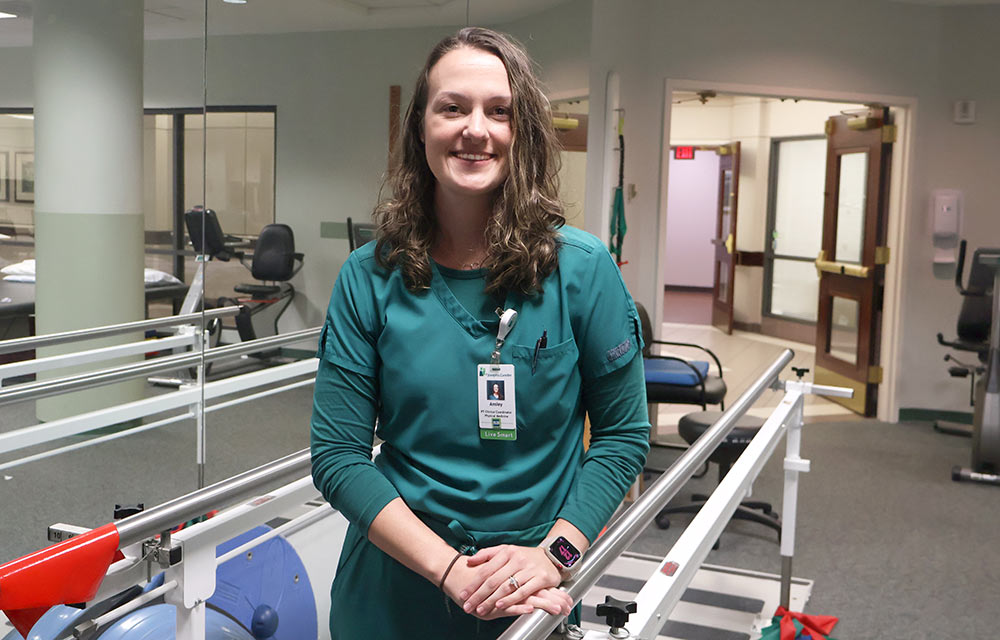
“Dry needling, along with therapeutic exercise and education, can ultimately improve a patient’s quality of life,” says Ansley Rodriguez, St. Joseph’s/Candler physical therapist and certified in dry needle therapy.
What is dry needle therapy?
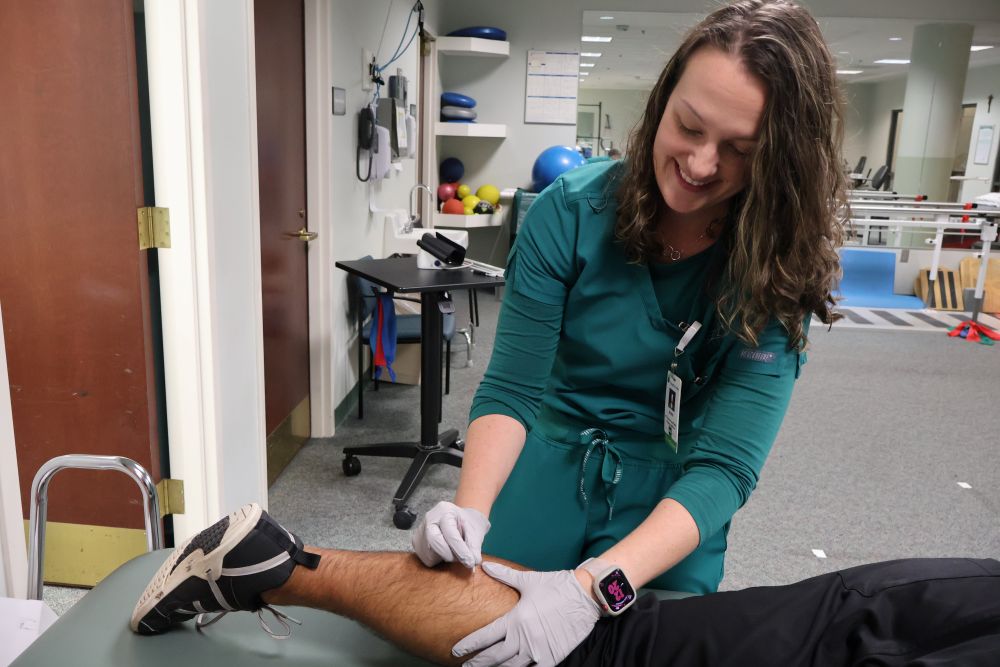
Dry needling uses a sterile, monofilament needle that ranges in size from 40 milliliters or shorter to 75 milliliters or longer, Rodriguez explains. The length of the needle the therapist uses depends on where it is inserted and what other anatomy is around the muscle.
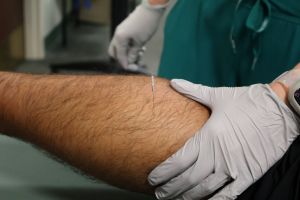
“The needle can be placed into a muscle that is irritated, has a spasm or a trigger point, which is when your muscle gets a knot in it,” Rodriguez says. “Once the needle is in the muscle, you can either leave it in there, which is called in situ, or you can take the needle and move it in and out of the muscle belly.”
Dry needling can be used from head to toe, Rodriguez says. In addition to muscle contractions, it can help with frequent headaches or migraines and treat jaw muscles for patients suffering from TMJ.
“The goal is to get what’s called a localized twitch response, which means the muscle quickly contracts and relaxes, and that spasm or knot is gone and the pain decreases,” Rodriguez says. “It also can bring fresh blood to the area to help with healing.”
While most people are candidates for dry needling, it’s not for everyone. Dry needle therapy would not be recommended for anyone with a cancer diagnosis, lymphedema or numbness in any part of the body, for example.
Also, dry needling is most effective when it’s in combination with therapeutic exercises, activities and neuromuscular education, Rodriguez says.
What does dry needling feel like?
During dry needle therapy, you may feel a little prick initially, Rodriguez says. After that, some patients don’t feel much of anything, while others may feel a deep aching feeling. Some even feel their muscle contract.
“Afterwards, you are going to be sore for a couple of days. Honestly, it’s can feel like an intense workout,” Rodriguez says.
Side effects vary from patient to patient. Some may experience no side effects, while bruising is common for others. You may also bleed during the therapy, but Rodriquez assures that is controlled before you leave.
How do you get certified in dry needle therapy?
Rodriguez, a certified physical therapist, first learned about dry needling in physical therapy school. After graduation, she took a 50-hour, in-person class. “Everything that I needle, I had to legally have done on me as part of my training.”
Then, there’s a written exam and practical you have to pass to become certified in dry needle therapy.
“When I was in undergrad school, it was on my bucket list to get certified in this,” Rodriguez says. “I had migraines and bad headaches. When the therapist I was working with during my training did dry needling on me, I went two weeks without a headache. That was the longest I’d ever gone, so I knew I wanted to do this so I could help others too.”
What to expect during your session
Most outpatient rehab appointments last about 45 minutes. The dry needling part takes about 10 minutes, Rodriguez says, and the rest of the time is for education and exercise. You also will be given exercises and stretching to do at home.
How many sessions you need varies from patient to patient depending on injury and insurance. St. Joseph’s/Candler Outpatient Rehab now offers self-pay. Call one of our locations to learn more.
Dry needling is currently available at the Candler Hospital Outpatient Rehabilitation location. You can request an appointment online or call us for more information. Any type of therapy requires a physician’s referral.