

Choose SJ/C for Your Hernia Surgery
- Expedited Care: Our goal: A consultation scheduled within 7 days of calling and your hernia surgery performed within 30 days. A registered nurse in the Hernia Center of Excellence is ready to hear from you.
- Not every patient requires a referral. Most hernia consultations can be scheduled the same day you call, depending on your insurance coverage.
- Advanced technology and techniques: You have access to the latest surgical technology in the region at St. Joseph's/Candler, including robotic and minimally invasive options, tailoring your hernia surgery to what’s best for you.
- Experienced, board-certified surgeons: Our surgeons are not only board-certified by the American College of Surgeons and trained to treat every type of hernia but are accredited Master Hernia Surgeons by the Surgical Review Corporation.
- Coordinated care from start to finish: Your consultation, hernia surgery, and recovery are supported by one connected team, allowing improved communication and consistent care.

What Does It Mean to Be a Hernia Center of Excellence?
St. Joseph's/Candler is the region's first accredited Hernia Center of Excellence by the Surgical Review Corporation (SRC). This accreditation recognizes St. Joseph’s/Candler’s commitment and high standard of delivery of quality patient care and safety in hernia surgery.
Health care facilities and hernia surgeons seeking Surgical Review Corporation (SRC) accreditation undergo an extensive assessment and inspection process to ensure the applicant meets SRC’s proven standards and requirements. These requirements include surgical volumes, facility equipment, clinical pathways and standardized operating procedures for hernia surgery, with an emphasis on patient education and continuous quality assessment.
Schedule Your Hernia Surgery Consultation Today
A hernia won’t heal on its own, and waiting can allow it to grow or cause more discomfort. Call our dedicated Hernia Center of Excellence coordinator today to schedule a consultation for your hernia surgery with a Master Surgeon or submit our simple online form.
Common Types of Hernias We Treat
Board-certified by the American College of Surgeons, all of our surgeons are trained to treat all types of hernia surgery, from the most common to the rare and difficult.
Inguinal Hernia
An inguinal hernia is when part of your intestine pushes through a weak spot in your lower belly (abdominal) wall. This area is called the groin. The hernia creates a lump in your groin. Over time, the hernia may get bigger. The only solution is hernia surgery.
You are at greater risk for an inguinal hernia if you:
- Are male
- Are obese
- Are a pregnant woman
- Have a family history of inguinal hernias
- Smoke
Symptoms may include:
- A lump in the groin or in the sac that holds the testicles (the scrotum)
- Pain or pressure in the groin that gets worse when you cough, strain, lift, or exercise
- A burning feeling in the lump
- Steady, growing pain if the blood supply to the bulging part of the intestine is cut off (called a strangulated hernia)
In severe cases, the intestine is partly or fully blocked. Symptoms in severe cases may also include:
- Infection
- Nausea
- Vomiting
- Lack of hunger
Hiatal Hernia
In a hiatal hernia, part of your stomach pushes up into an opening (the hiatus) in your diaphragm. The diaphragm is the muscle between your belly (abdomen) and your chest.
You are at greater risk for a hiatal hernia if you:
- Are age 50 or older
- Are overweight or obese
- Are pregnant
- Smoke
Symptoms that you may need hernia surgery include:
- Burping
- Feeling nauseous
- Vomiting
- Backflow (reflux) of acid or stomach contents into the esophagus or throat
- Heartburn
- Regurgitation
- Trouble swallowing
Umbilical Hernia
An umbilical hernia occurs when part of the intestine or other abdominal tissue protrudes through a weakness in the abdominal wall near the belly button. It is more common in women than in men.
You are at greater risk for an umbilical hernia if you:
- Obesity
- Multiple pregnancies
Symptoms may include:
- A visible bulge near the belly button that may increase in size when standing, coughing, or straining
- Pain or discomfort, especially when pressing on the bulge
- Nausea or vomiting (rare)
Ventral Hernia
A ventral hernia occurs when abdominal tissue pushes through a weakness in the front wall of the abdomen. Umbilical, epigastric, and incisional hernias are all types of ventral hernias that can require surgery.
You are at greater risk for a ventral hernia if you:
- Have had abdominal surgery
- Are obese
- Have chronic coughing or straining
- Have been pregnant
Symptoms may include:
- A bulge in the abdomen that may be more noticeable when standing, coughing, or straining
- Pain or discomfort at the site, especially with lifting or activity
- Nausea or vomiting if the hernia becomes blocked or trapped (seek care right away)
Incisional Hernia
An incisional hernia develops when tissue pushes through a weakened area of the abdominal wall where a prior surgical incision was made. It can appear weeks, months, or even years after surgery.
You are at greater risk for an incisional hernia if you:
- Have had abdominal surgery
- Are obese
- Have an infection or slow healing after surgery
- Smoke
- Strain or lift heavy objects soon after surgery
Symptoms may include:
- A bulge at or near a surgical scar that may grow over time
- Pain or tenderness around the incision site
- A feeling of pressure or pulling in the abdomen
Epigastric Hernia
An epigastric hernia occurs when fat or tissue pushes through a weak spot in the abdominal wall between the belly button and the lower part of the breastbone.
You are at greater risk for an epigastric hernia if you:
- Are obese
- Have chronic coughing or straining
- Do frequent heavy lifting
- Have had multiple pregnancies
Symptoms may include:
- A small, visible lump in the upper middle abdomen that may appear when standing, coughing, or straining
- Pain or tenderness at the site, especially with pressure or activity
- Nausea or vomiting (rare)
Flank Hernia
A flank hernia occurs when abdominal tissue protrudes through a weakness in the muscles of the side of the abdomen, between the ribs and the hip. It is less common than other hernias and often follows surgery or injury.
You are at greater risk for a flank hernia if you:
- Have had flank or kidney surgery
- Have had a significant injury to the side of the abdomen
- Are obese
- Have had a wound infection or poor healing after surgery
Symptoms may include:
- A bulge on the side of the abdomen that may be more noticeable when standing, coughing, or straining
- Pain, pressure, or discomfort in the side or back
- Nausea or vomiting (rare)
Paraesophageal Hernia
A paraesophageal hernia is a type of hiatal hernia in which part of the stomach pushes up through the diaphragm and sits alongside the esophagus in the chest. It can lead to serious complications if left untreated.
You are at greater risk for a paraesophageal hernia if you:
- Are over age 50
- Are obese
- Have had prior surgery near the stomach or esophagus
- Have a larger-than-normal opening in the diaphragm
Symptoms may include:
- Chest or upper abdominal pain or pressure
- Difficulty swallowing or a feeling that food gets stuck
- Heartburn, regurgitation, or feeling full quickly after eating
- Shortness of breath or vomiting (seek care right away if severe)
Meet Our Hernia Surgeons
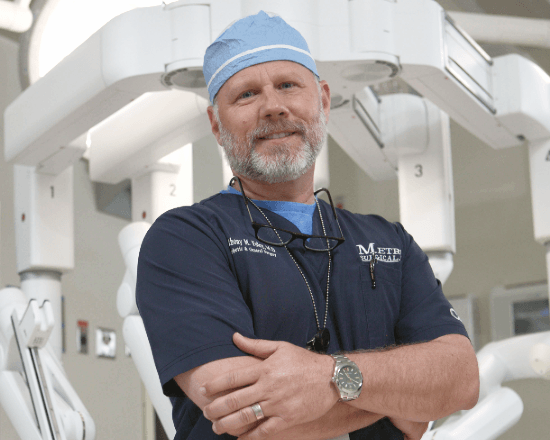
St. Joseph’s/Candler has four Hernia Center of Excellence surgeons: Dr. Anthony Foley, Dr. Jeffrey Mandel, Dr. Timothy Finnegan and Dr. Narra Reddy.
As part of our Hernia Center of Excellence accreditation, our providers undergo a rigorous, unbiased inspection to ensure they meet nationally and internationally recognized standards of excellence for hernia surgery. The inspection evaluates treatment pathways and consultative services, equipment, patient education and support groups, and surgical experience.
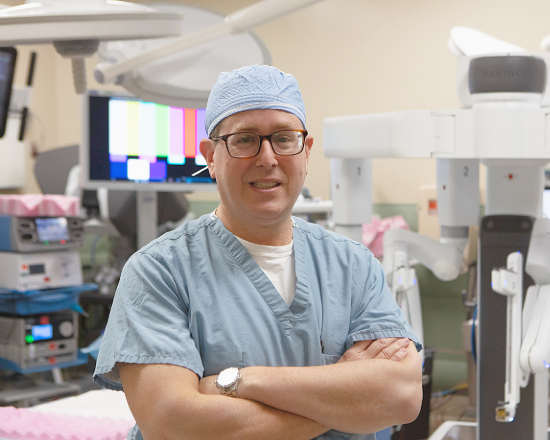
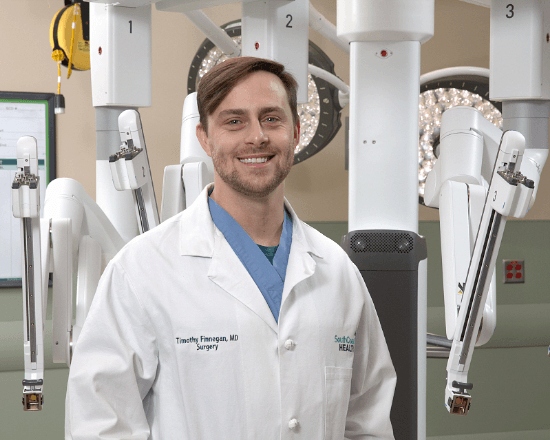
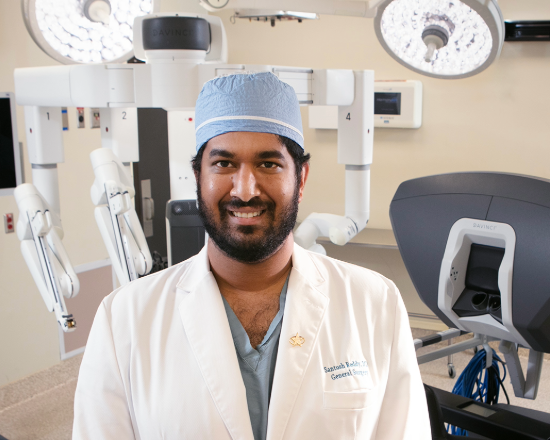
Hear firsthand from our Master Hernia Surgeons what it means to be an accredited Hernia Center of Excellence.
Hernia Surgery FAQs
Where are SJ/C's hernia surgery locations?
Our surgeons perform hernia surgeries at St. Joseph’s Hospital, Candler Hospital, and the SJ/C Pooler Campus.
St. Joseph’s Hospital (our surgery center is located next the emergency room, facing Abercorn Street)
11705 Mercy Blvd.
Savannah, Ga. 31419
Get directions
Candler Hospital (our surgery center is located in the rear of the hospital, closer to Paulsen Street)
5353 Reynolds Street
Savannah, Ga. 31405
Get directions
Pooler Campus
101 St. Joseph’s/Candler Drive (our surgery center is located on the first floor)
Pooler, Ga. 31322
Get directions
How do I get in contact to schedule a hernia consultation?
The SJ/C Hernia Center of Excellence has a dedicated coordinator for all patients needing hernia surgery. For any questions, you can call at 912-819-2778 or fill out an appointment form to request a consultation.
What is a hernia?
A hernia happens when an organ or tissue pushes through a weak spot in the surrounding muscle or connective tissue. Hernias often form in the abdomen or groin and may appear as a bulge that becomes more noticeable when you cough, lift, or strain.
What are the symptoms of a hernia?
Many people notice a visible bulge, aching or pressure in the area, or discomfort when lifting, bending, or standing for long periods. Some hernias cause little pain at first, so a bulge alone is reason enough to get checked.
Do all hernias need surgery?
Not always, but it is still good to be evaluated properly by a doctor or hernia specialist. Small hernias without symptoms may be monitored over time. Hernias that grow, cause pain, or limit your daily activities typically require hernia surgery because they do not heal on their own. A surgeon can help you decide what is right for you.
What types of hernia surgery do your surgeons perform?
All of our surgeons are trained to perform surgical hernia repairs robotically, laparoscopically, or through open surgery. Your surgeon will recommend the approach based on your individual characteristics and the location of your hernia. We tailor our approach to be minimally invasive when possible and when it best serves you.